
BIG MAN v TNB: A Decade to Justice
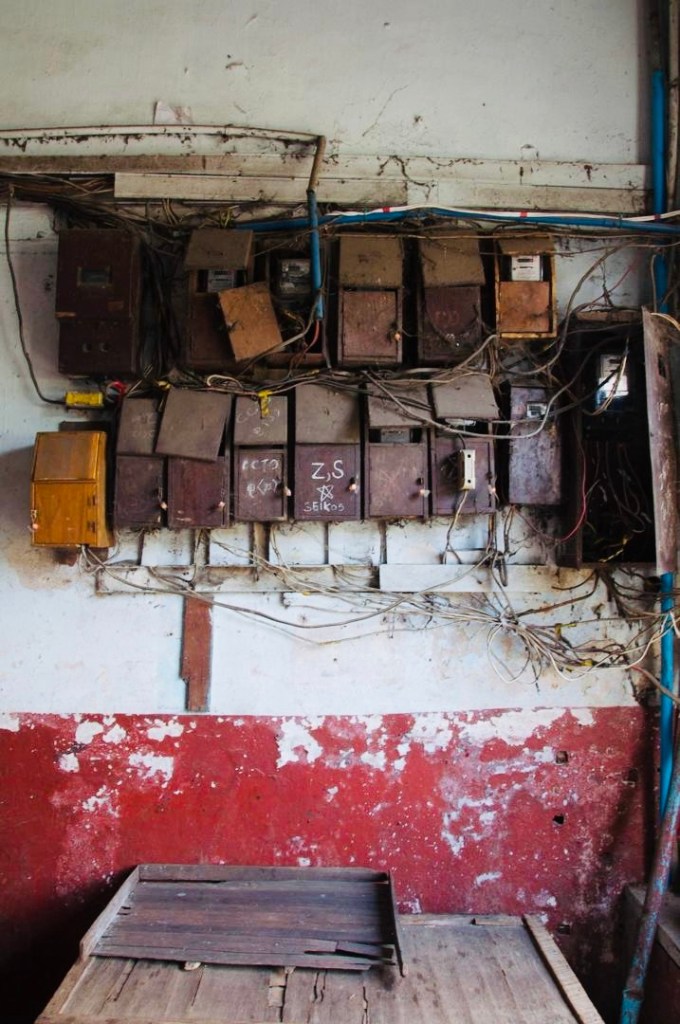
Kerk Boon Leng (c) Copyright Reserved 2007
As vital as air and water, electricity is life’s current; its monopoly is a duty, not a license for profit.
For Big Man Management Sdn Bhd (“Big Man”), however, it became the source of a decade-long legal struggle.
Our firm successfully represented Big Man in a landmark decision of the Federal Court delivered recently against Tenaga Nasional Berhad (“TNB”). This judgment not only brought closure to a protracted dispute but also set important precedent: it clarified the standard of proof required for special damages and affirmed the availability of exemplary damages against statutory monopolies.
Case Note: Big Man Management Sdn Bhd v Tenaga Nasional Berhad (Federal Court, 7 July 2025)
Background
Big Man Management Sdn Bhd (“Big Man”) operated an ice-making facility. In 2014 and 2015, Tenaga Nasional Berhad (“TNB”), Malaysia’s sole electricity supplier under statute, disconnected the facility’s electricity supply, alleging meter tampering. Critically, the alleged tampering had already been rectified by the time of the disconnections.
The disconnections crippled Big Man’s ice-making operations. Big Man sued, claiming wrongful disconnection, trespass, and breach of statutory duty.
The High Court awarded special damages exceeding RM3.5 million, together with exemplary damages (calculated at 25% of the special damages).
On appeal, the Court of Appeal reversed the awards, holding that the damages claimed were not “strictly proved” and cast doubt as to whether exemplary damages could be awarded against a statutory monopoly.
Issues
1. What is the correct interpretation of “strictly proved” and the standard of proof for special damages ?
2. Are exemplary damages available against a statutory body exercising monopoly powers?
3. What principles should guide the assessment of quantum for exemplary damages?
Decision
The Federal Court allowed Big Man’s appeal and restored the High Court’s finding of liability. It held:
• Special Damages: The requirement of “strict proof” means proof on the balance of probabilities, not a heightened evidential standard. Big Man had sufficiently proven its losses.
• Exemplary Damages: Such damages are available against statutory bodies in appropriate cases. Where a monopoly exercises its powers oppressively, arbitrarily, or in conscious excess of authority, exemplary damages are justified. TNB’s conduct fell squarely within this category.
• Quantum: The Court awarded RM100,000 in exemplary damages, emphasising that exemplary damages must be proportionate and fact-specific not based on a percentage formula.
In a reasoning that departs from 1964 English House of Lord case of Rookes v Barnard by extending exemplary damages beyond the narrow categories and treating TNB as quasi-governmental because of its statutory monopoly over electricity supply and essentially re-characterising “government servants” to reflect today’s local constitutional and statutory realities, Tan Sri Nallini Pathmanathan FCJ made this powerful ruling:
“ TNB is the sole statutory body established for the supply of electricity to the entire Peninsular Malaysia. It therefore cannot be equated to a private limited company. The fact that TNB is not a governmental body cannot exculpate it from the scope of exemplary damages as it wields great power due to its monopoly on the supply of electricity, as constitutionally mandated.

(TNB)owes a statutory duty to consumers to provide undisrupted electricity as stipulated under the ESA (The Electricity Supply Act). The established basis for collection of arrears is to do so as a debt.TNB cannot be allowed to hold electricity to consumers as ransom.”
Significance
This case is significant on several fronts:
1. Clarification of Standard of Proof: Claimants for special damages need only prove on the balance of probabilities, restoring clarity and removing an artificial evidential barrier.
2. Accountability of Monopolies: The ruling confirms that statutory monopolies are not immune from punitive remedies. TNB, long shielded by its legislated monopoly, was reminded that monopoly power cannot be exercised with impunity.
3. Guidance on Quantum: The Federal Court’s move away from a formulaic percentage towards a fixed sum underscores that exemplary damages are to be applied cautiously, with restraint and proportionality.
Commentary
The Federal Court endorsed the learned High Court Judge Dato’ Ahmad Kamal’s damning factual findings:
> [95] We have, therefore, given serious consideration to the findings of the High Court. The learned trial judge states clearly that TNB conducted itself in a manner which was gravely improper and excessive, in disconnecting Big Man’s electricity supply. The High Court so concluded on the basis of its findings, as set out in its judgment:

(i) TNB intentionally punishing the consumer through the disconnection of its electricity supply, which comprised the lifeblood of Big Man’s ice-making business;

(ii) TNB intentionally prolonging the first disconnection for a maximum of three months without any acceptable basis, despite admitting that such maximum periods were not applied to first-time disconnections;

(iii) TNB refusing to meet Big Man’s representative for possible reconciliation, and showing insolence; and

(iv) TNB effecting the second disconnection with impunity and without regard for the pending case concerning the first disconnection, without waiting for a judicial pronouncement on Big Man’s rights under the Electricity Supply Act (ESA).

 kerkco.com